The engineer, no longer deployed
but still present
AI's next stop isn't a smarter model — it's getting the model into every real context.
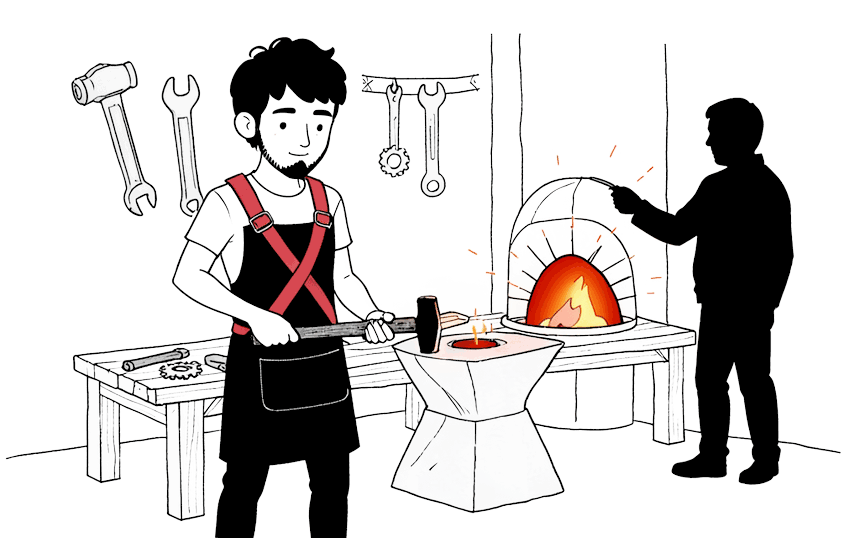
The people who did that were called FDEs: Palantir's 2010 coinage for institutionalized
grunt work — you had to get inside the customer to see the real jam.
We think the role outlasts the name. It's the ANE — AI Native Engineer: not deployed, but
fluent in what AI can and cannot do, turning pain into product for
individuals, small orgs, and cities.
This repository is their workbench.
Not deployed, but present
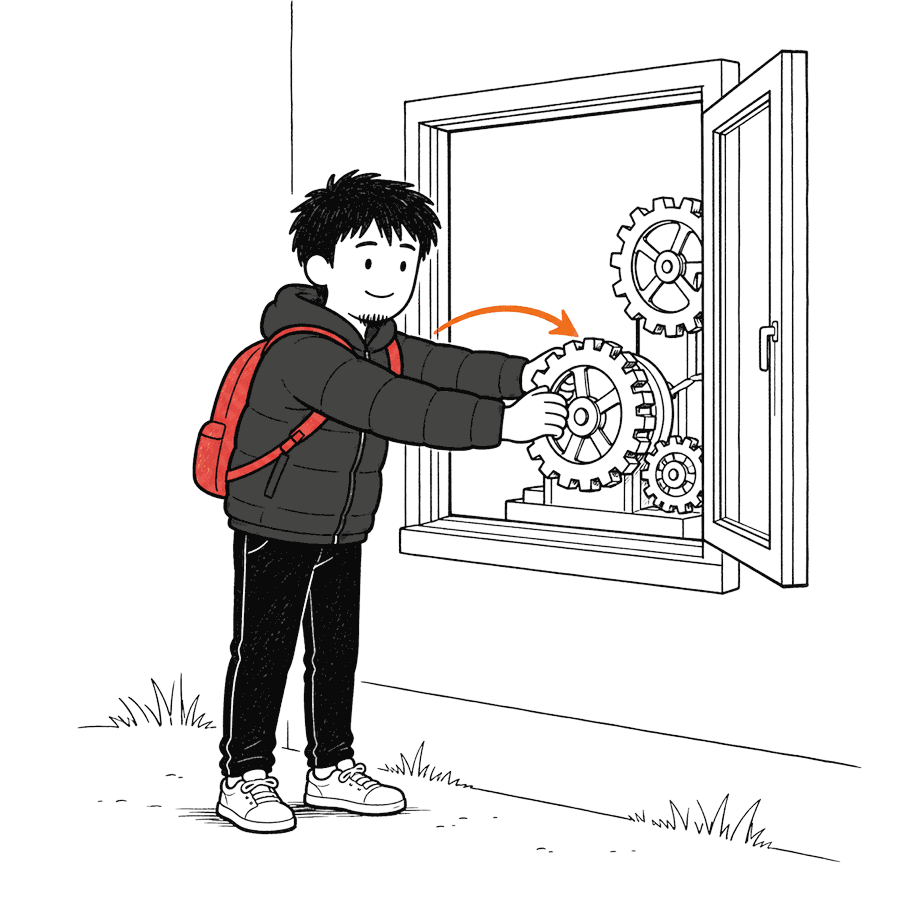
He stands outside the client's building — his feet never cross the threshold. But his hands reach in through the window and turn the gears. The thing inside moves because of him.
When the cost of productivity
approaches the price of electricity,
what's left for you to do?
This forecast has no rigorous scientific proof behind it. It grew out of personal observation and the feedback of many sources. But it determines everything about how this repository is designed.
First, what won't disappear: the person frying dough sticks, the bakery, all of service work. Eating bread is far less efficient than an injection of nutrients — yet most people will never take the shot. Because humans carry ingrained habits and emotional needs, and it is precisely those things that make you a person. Give them up, and the human flavor goes with them.
— On what cannot be replacedWhat does get restructured is commercially driven work — the roles that exist purely in pursuit of extreme efficiency. There, we believe only three roles retain core value. And they are not mutually exclusive; they stack: an ANE may also be an Innovator, and may also be a YouTuber.
One person, three ways to live
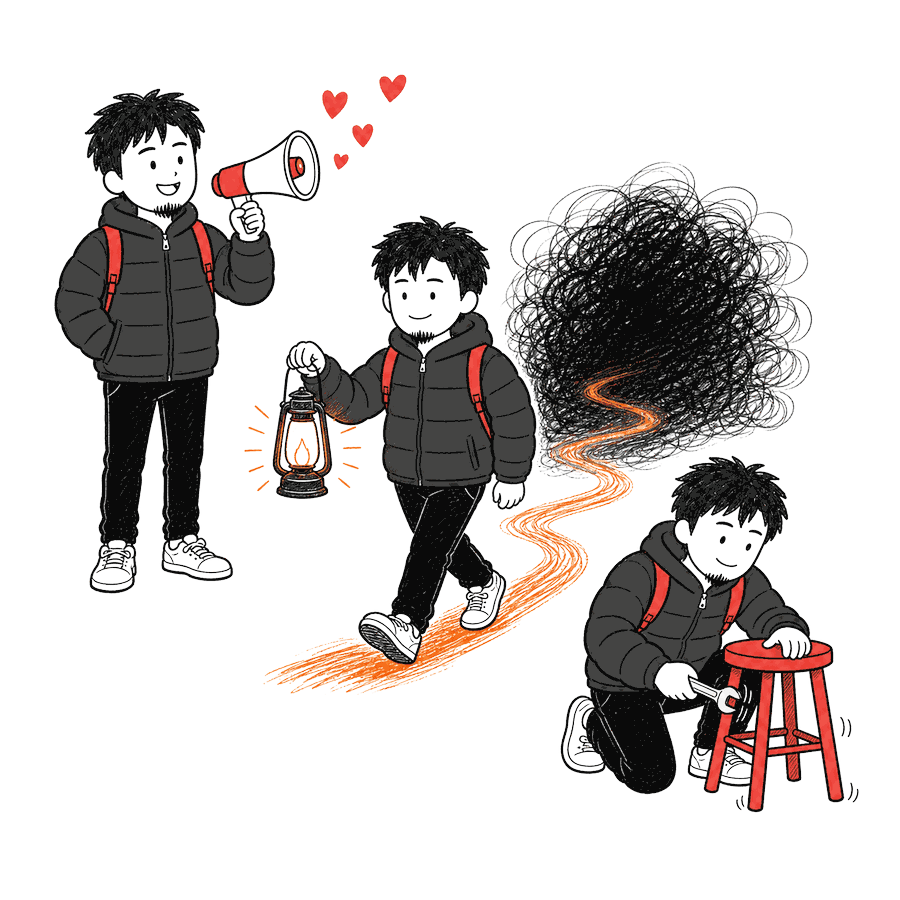
The Expresser speaks into the megaphone — the things only a person can say. The Innovator carries a lantern into the fog and leaves a path behind for others. The Builder kneels down and fixes the wobbly stool that hurts someone every day.
Expresser
AI will never say “that dress looks great” or “the food at this place is good.” Because it isn't a person. It cannot express human feeling. Those who express honestly have room to live, room to imagine, and can even close their own economic loop.
Innovator
When the tools that exist can't reach the better world they imagine, they go and build it themselves. What separates an innovator from an imitator is unshakable conviction about the future — when the whole map is fog, someone walks a path through it.
Builder
Standing on the road the innovators cleared, they land the branching details of real scenarios. Builders solve “small problems” — and those small problems are, for the specific person living them, a pain endured every single day.
Demand side · Three roles · The ANE work loop
On the left, who needs to become AI native. In the middle, who they should go find. On the right, how that person actually works. The band along the bottom is what we provide.
The ANE flywheel
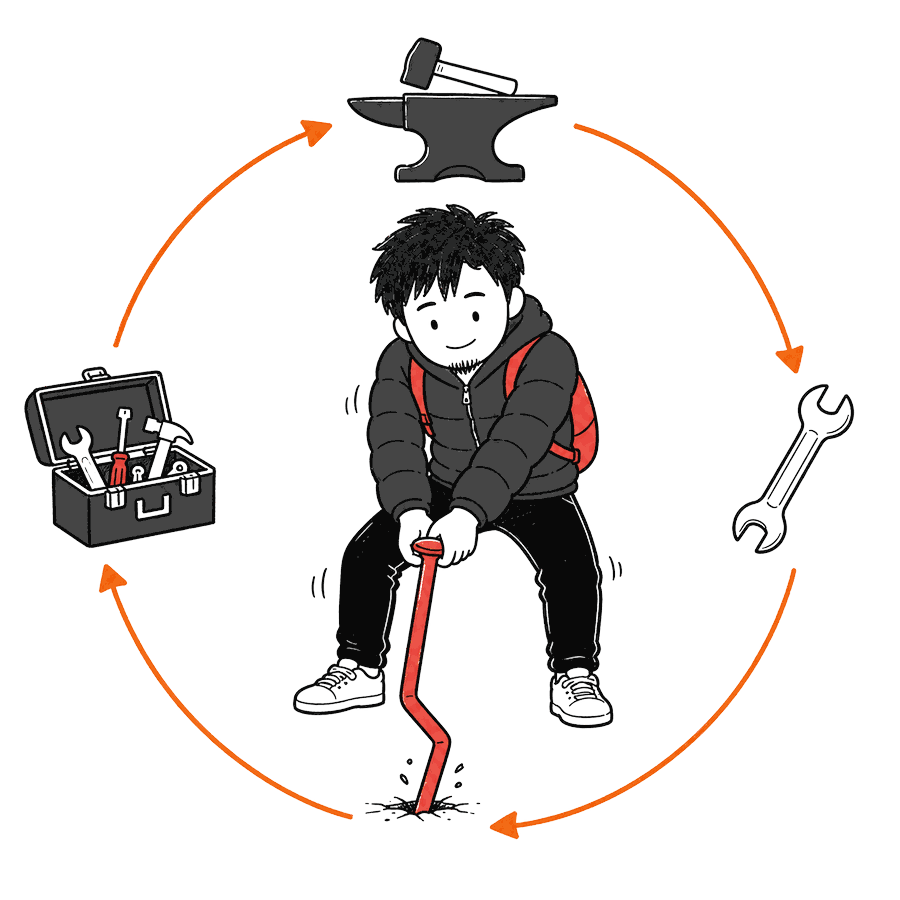
The map above, in plain words: pull the bent nail out of the client's floor (the pain point), forge it into a usable tool (the product), drop it in the toolbox — which is now fuller, so the next nail comes out easier.
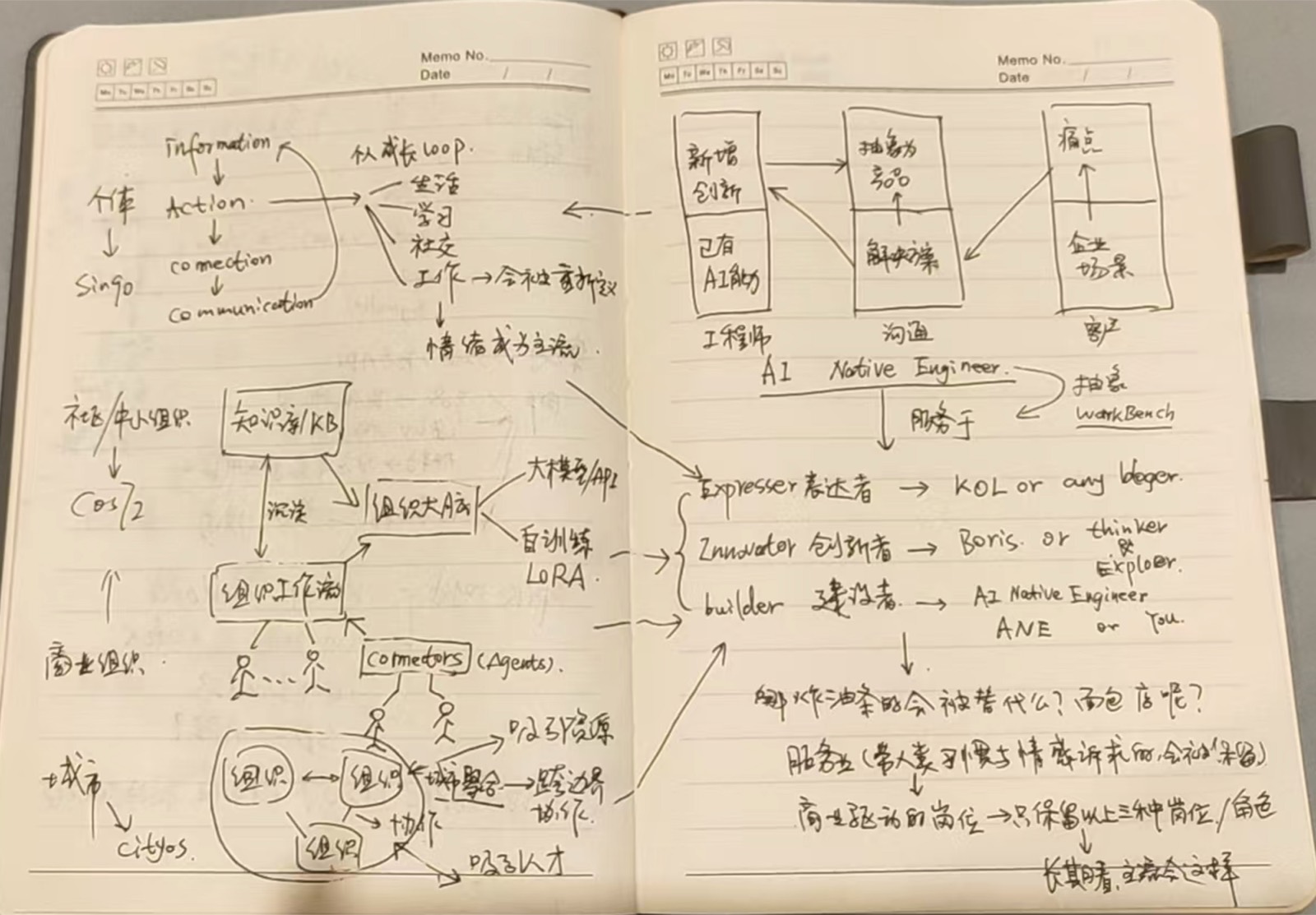
It all started on one notebook page
The diagram above didn't come out of a template. It's the structured version of this handwritten page — left side: the three constituencies and their operating systems; right side: the ANE work loop and the three roles.
Every sentence spoken while explaining this page was archived verbatim. Views will change, but how we thought at the time is worth keeping.
Read the blueprint →Three operating systems
Individuals, small organizations, cities. Three constituencies, three Apache 2.0 open systems. They are not products. They are digital public goods.
| System | For | Core | Status |
|---|---|---|---|
| Sin90 | Individuals | Built around the growth loop — Information → Action → Connection → Communication — to raise ordinary people's digital wellbeing | Designing |
| Cos72 | Communities / small orgs / businesses | Knowledge base + org workflow + org brain (LLM API + self-trained LoRA) + connectors | In progress |
| CityOS | Cities | Inter-org collaboration and resource pooling — the city itself becomes an agent, drawing capital and talent across borders | Long term |
Ten years ago, every industry had to go online.
Now, every industry has to go AI.
This is not a prediction; it's a settled fact sitting in plain view. AuraAI, as an organization that gathers ANEs, keeps accumulating and exchanging what it learns — so that more people can become Expressers, Innovators and Builders.