Three operating systems
Three constituencies
Individuals, small organizations, cities.
They are not products. They are digital public goods — open source, free, permissionless: anyone can use, modify and deploy them.
Sin90 — the individual growth loop
Everyone runs the same loop every day; only the contents differ. Opening your eyes and checking the clock, scrolling WeChat, scrolling Xiaohongshu — even just pulling the curtain to look at the weather — all of it is taking in information. That is your first step.
You already run this loop
Open a window, do a thing, plug into someone, talk — and the talking sends you back to open the window again. You've been running this lap your whole life. Sin90 just runs it with you.
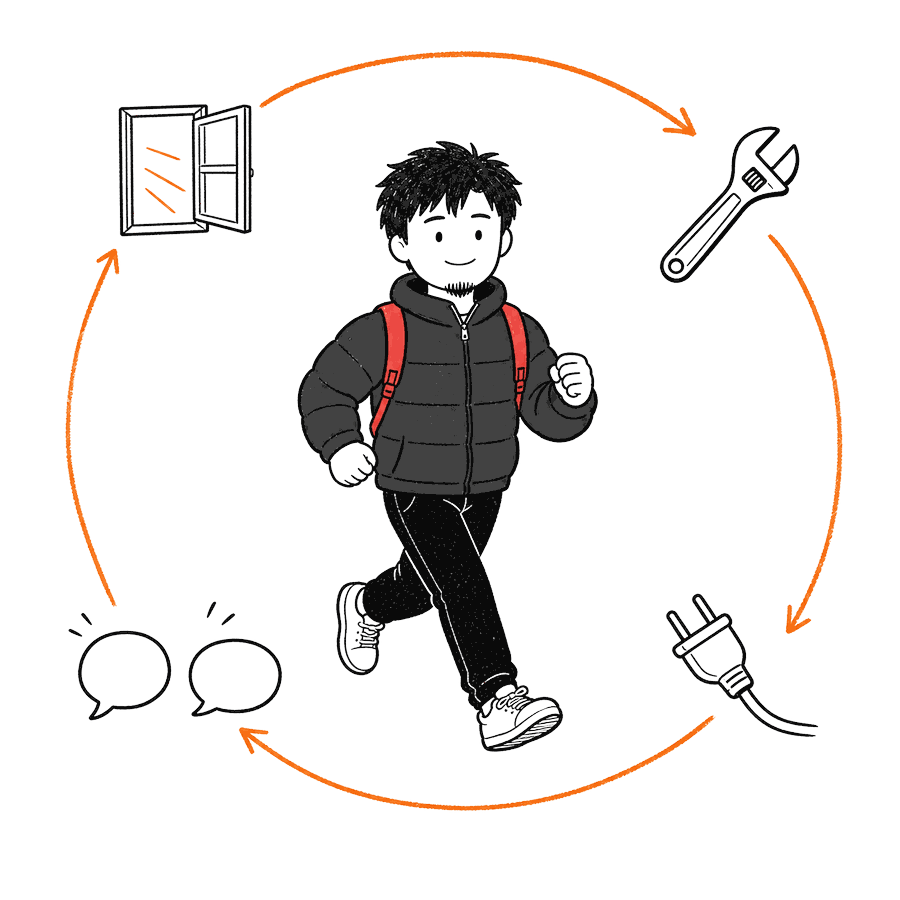
Sin90 has exactly one goal: to stand around this loop and give an ordinary person a lift in work, life, learning — even starting something of their own, so that some of the wellbeing of digital life actually reaches them.
Cos72 — the organization collaboration system
Plenty of small organizations have no engineering muscle, no technical staff, and can't even afford a single FDE. So can they be their own FDE? Break the job apart, collaborate to find the innovators and the builders, and build the organization's own AI capability the ANE way. I think they can.
Knowledge Base
The knowledge an organization has accrued is scattered across databases, the heads of long-serving staff, and the impressions of customers. In the age of AI, it has to be laid down and kept.
Organizational Workflow
Mission, vision, values, business logic — why does this thing exist at all? All that soft matter finally has to land through process. Nonprofits and businesses: same principle.
Organizational Brain
An LLM API (OpenAI / Anthropic / DeepSeek⋯) + a self-trained LoRA: fine-tune on the organization's own data for its own scenarios, until the model knows that organization inside out.
It's all in the drawers
The org's knowledge is in a filing cabinet, in a database, in one old employee's head. Cos72 gets it out of the drawer and into a brain the whole organization can use.
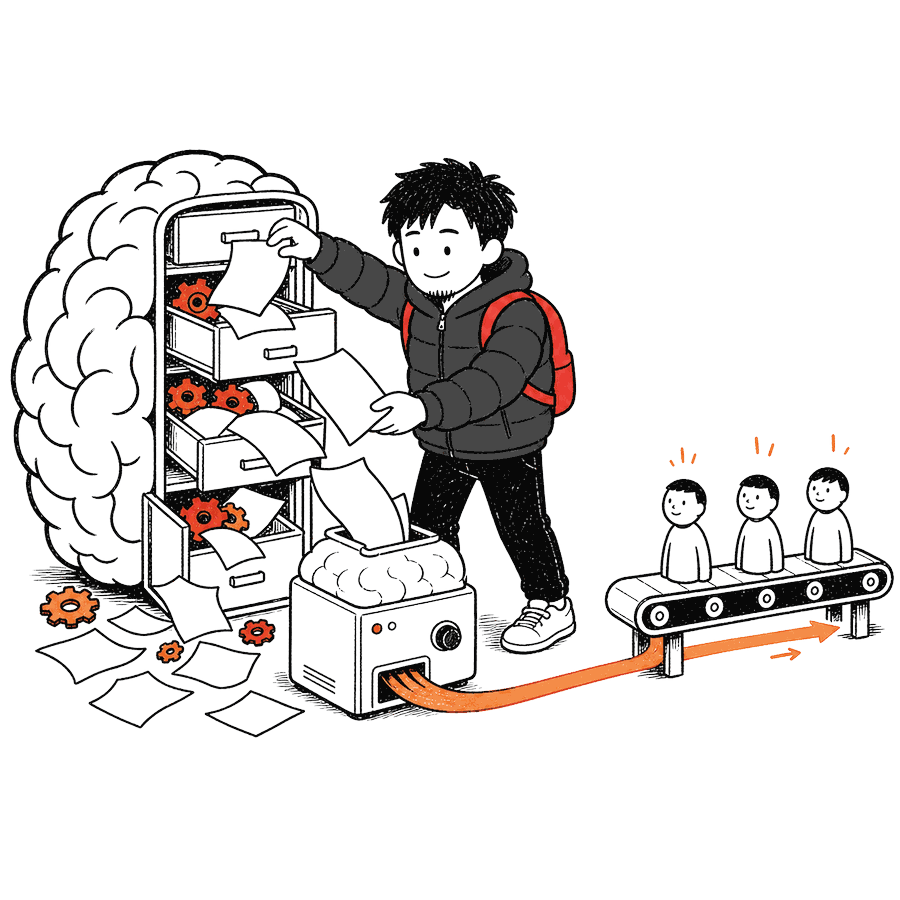
The self-trained LoRA is a conclusion for now. The future may break it — but today, it is what lifts an organization's process efficiency the most.
— On the organizational brainConnectors / Sensors (agents of all kinds)
An organization's workflow, like an individual's, needs a great many connectors and sensors. At bottom they are all agents:
- Scraping and analyzing industry data, and judging the news
- Auto-connecting outside suppliers and pulling quotes
- Pushing new products to customers on a cadence, and after-sales service
These agents take in information and hold up your organization's workflow.
CityOS — the city becomes an agent
Once every organization has a brain that knows its own context well enough, sharing between organizations will make new patterns of collaboration emerge — and resources will pool inside the city.
Inter-Org Collaboration
Nobody has to be omniscient. Each side only has to know enough of the other's information and context. New patterns of collaboration will grow on their own.
Attract Resources
Collaboration bounded by a city can reach across that boundary to draw in more outside resources.
Attract Talent
The city itself becomes an agent that collaborates with everyone — instead of playing everyone off against each other.
Wire the roofs together
Each building already thinks. String them together and something new shows up — and then people and resources start walking toward the city on their own. Nobody has tried this. That's exactly why it's worth trying.
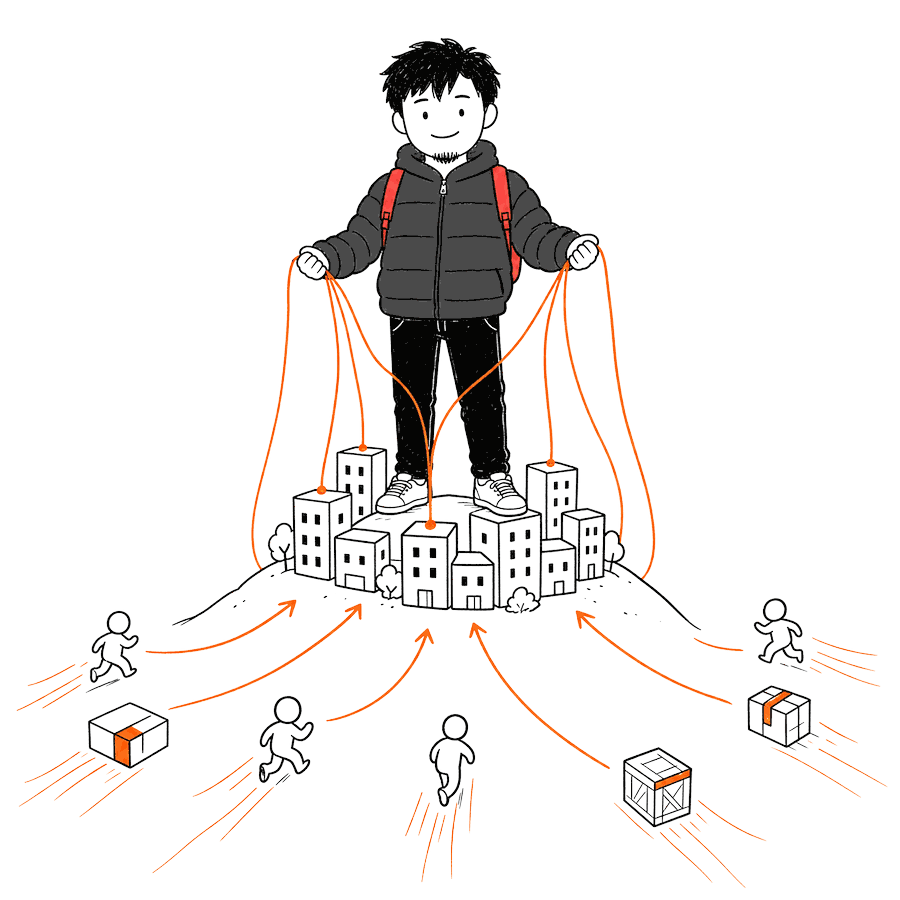
Chiang Mai is a tourist city. How does it draw more visitors than the other tourist cities of the world? I believe that is a question the mayor, the city government, and every resident would like answered. CityOS exists to answer it.
No one has tried this. But only those who go first get the dividend of digital wellbeing.