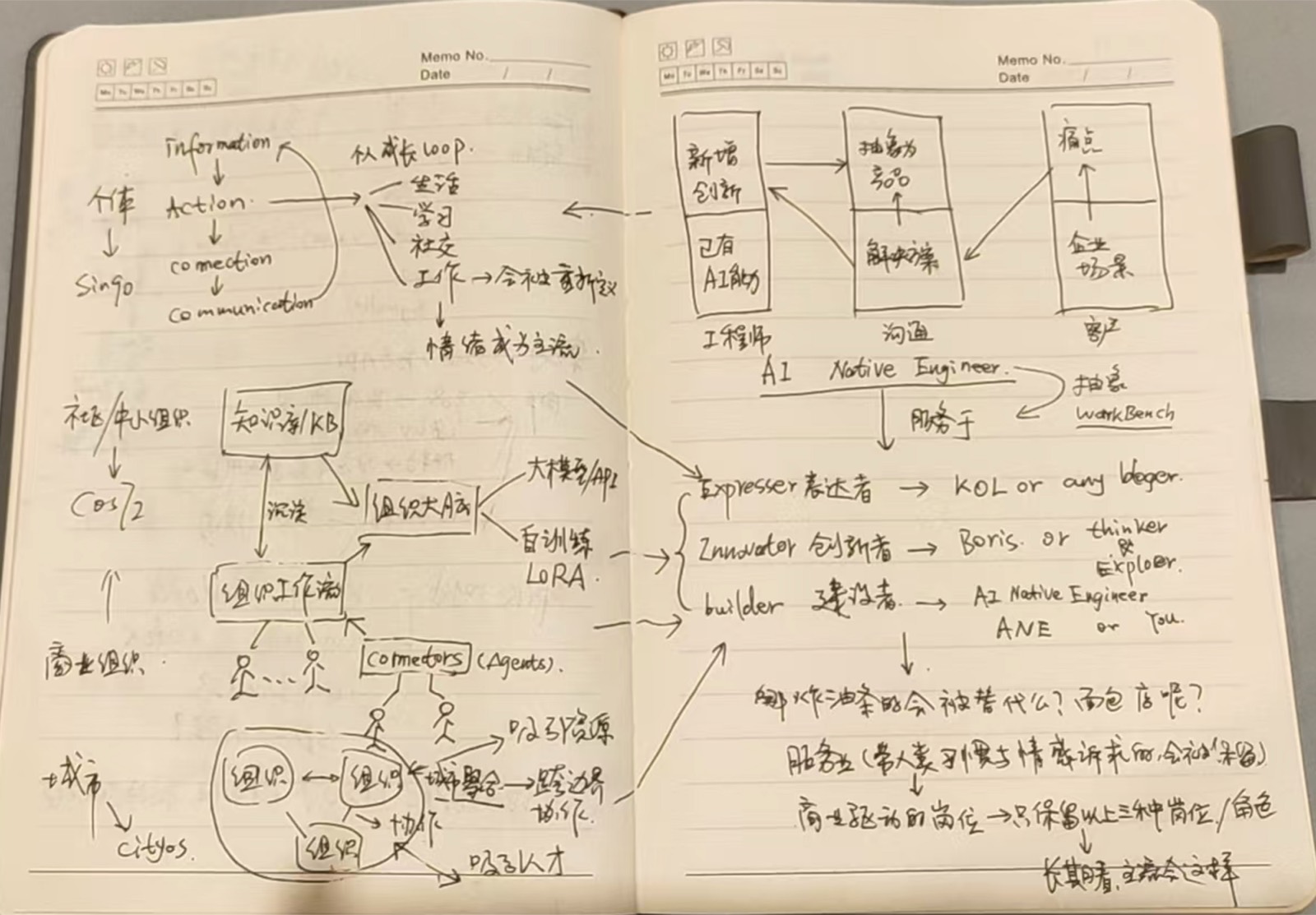
One notebook page,
and what it unfolds into
Below is the whole line of thought. Views will change, so every sentence spoken while explaining this page was archived verbatim — because how we thought at the time is worth keeping.
In one line
AI's next stop isn't a smarter model. It's getting the model into every real-world context.
The people who do this used to be called FDEs. Next, they're ANEs — AI Native Engineers. This repository is their workbench.
From FDE to ANE
Why FDE suddenly caught fire
AI has matured to the point where it has to walk out of the chat box and out of the developer bubble, and go serve real businesses and other organizations. This is what the current stage of AI demands — exactly the same road ERP and enterprise IT walked years ago.
FDE — Forward Deployed Engineer — is a term Palantir coined around 2010. At bottom it institutionalizes the grunt work: you have to get on site and inside the customer before you can accurately read the real business logic and workflow, before you can distill it, improve it, deliver a solution first and abstract it into their product second.
The core assumption behind ANE
We think this role will last a very long time — long enough that it shouldn't be called FDE anymore. It is the AI Native Engineer (ANE). The core difference from an FDE: it doesn't have to be forward-deployed.
We give the ANE a process model and the guidance that goes with it — this WorkBench — so they can cut into any domain fast: individuals, communities, businesses, cities.
This assumption most likely holds. All we did was give it a new name and a new way of working.
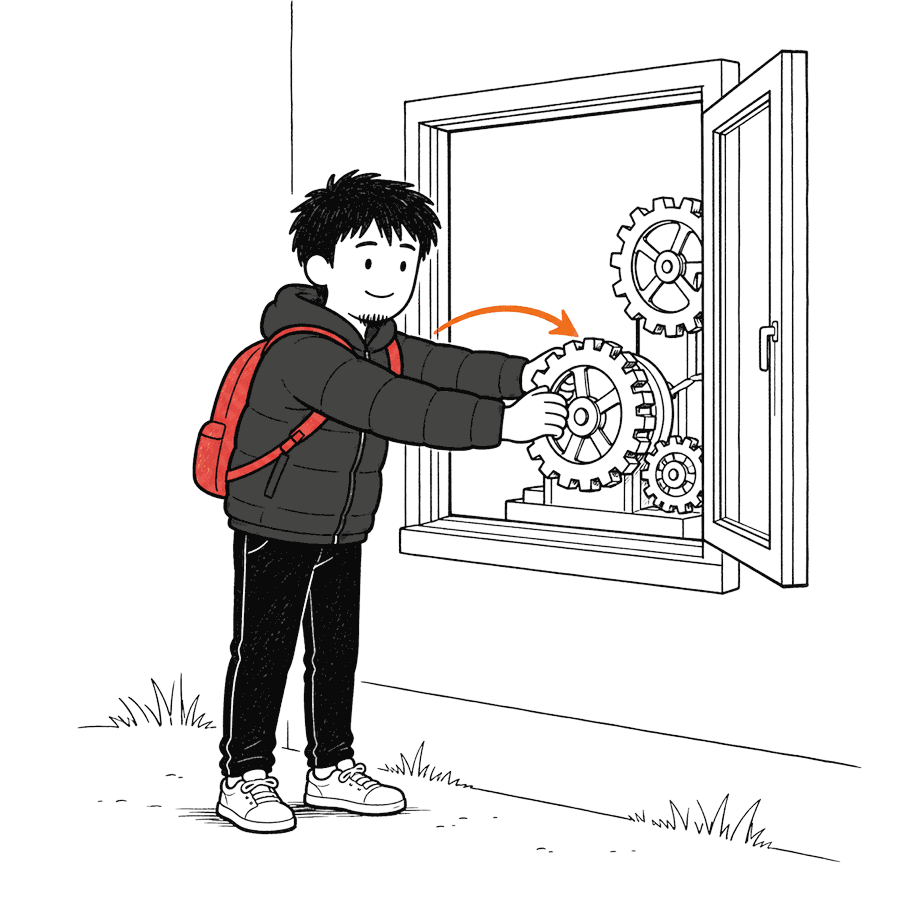
Not deployed, but present
That is the whole difference between an FDE and an ANE: the feet stay out, the hands go in.
The premise
If AI drives the cost of productivity in human society down so far that it approaches the price of electricity, then everyone has to face a new question: when AI takes my job, what is left for me to do?
This forecast has no rigorous scientific proof behind it. It comes from personal observation and from the feedback and analysis of many sources.
First, what won't disappear
The person frying dough sticks, the bakery, all of service work — they will always exist. They have for thousands of years.
Because they don't exist to satisfy efficiency. I go eat a piece of bread; there is a far more efficient way — inject you with a shot of nutrients. So why will most people never take the shot? Because humans carry ingrained habits and emotional needs, and only that kind of thing makes “you a person.” Give all of it up, and the human flavor is gone.
What gets restructured is commercially driven work
The roles that exist purely in pursuit of maximum commercial gain and endlessly rising efficiency — efficiency of collaboration, efficiency of production. There, we believe only three roles retain core value.
The three roles
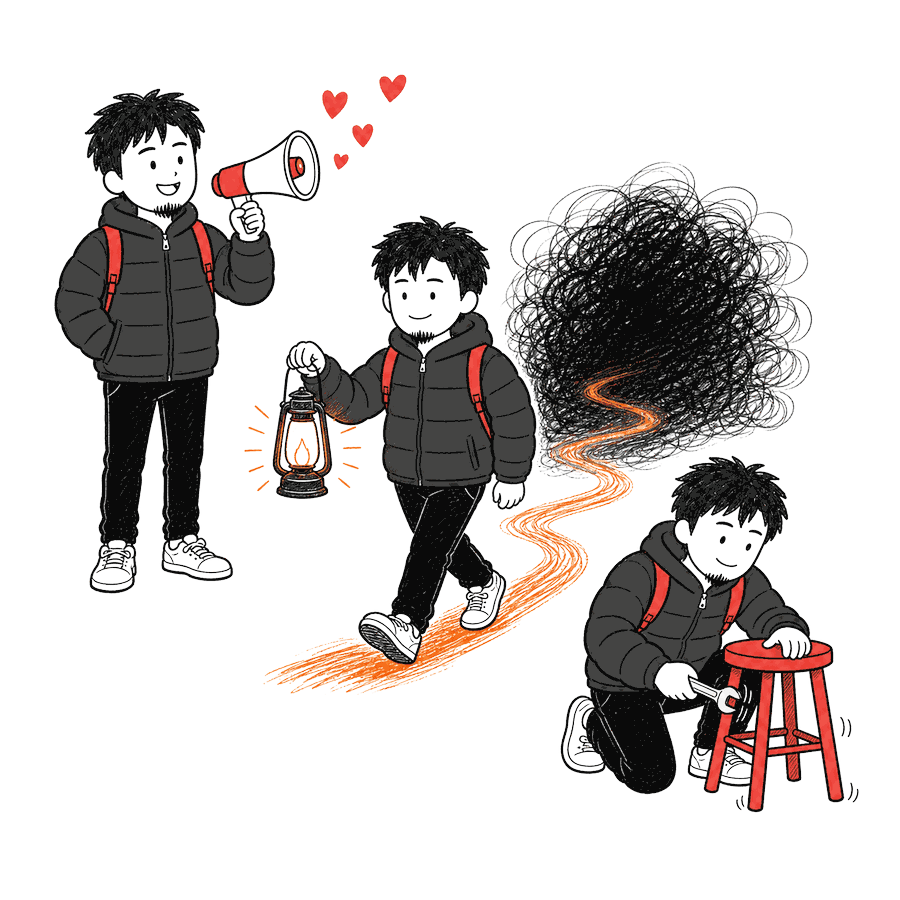
Expresser
AI will never say “that dress looks great” or “the food at this place is good.” AI won't say it, because it isn't a person. It really is that simple. It cannot express human feeling, because it isn't human.
So the expresser has plenty of room to live — plenty of room to imagine. KOLs, and anyone actively building their own IP and persona to express what they truly feel, will have a place of their own, and can even close their own economic loop.
Tools for Expressers →Innovator
When they have an idea, and find that today's tools, social conditions, ways of communicating and ways of learning cannot reach the better state they pictured — they will go and build that product, that process, that collaboration themselves.
A very clear example: after the large models arrived, ChatGPT didn't build a coding agent. Boris (Anthropic) did — and stayed rooted in it for years.
What separates an innovator from an imitator is the innovator's unshakable conviction about the future. While most people still haven't noticed, they are already hacking through the thorns, opening a new road for the rest of us. What the imitator sees is “so building a coding agent makes a lot of money.” What the imitator did not see was someone walking a path when the whole map was still fog. The imitator can make money. But he isn't as great as the innovator.
Innovation doesn't have to be grand. Small innovations are fine too. All that matters is that the idea is yours — and in this era, with AI behind you, going from idea to product may take a single night. Thinker, explorer: these are all names for the same kind of role.
Support for Innovators →Builder (= ANE)
With innovators out front, we can take the better tools they hand us and land many more real scenarios.
On Xiaohongshu there are plenty of women and humanities majors who know nothing technical, yet shipped excellent products because they thought very hard about one particular predicament. They carry some of the innovator in them, but mostly they take the conveniences and the base camp left by the innovators ahead as their starting point, and go build the detailed, branching scenarios that make society better.
Even if part of it is copying, imitating and learning, I think that's completely fine. What a builder solves is, by definition, the small problems bound up with ordinary people and ordinary organizations. And those small problems are, for the specific person living them, a pain endured every single day.
Become an ANE →The three stack
Is an ANE also a creator? Maybe. Also an expresser? Maybe they're a YouTuber too. The three are not mutually exclusive; they stack.
I hope every single person can become one of these roles — or several of them.
Three roles, and they stack
The megaphone, the lantern, the wrench — three people, or three afternoons of the same person.
Three operating systems
The demand side has three layers: individuals / small organizations / cities. They map to three Apache 2.0 open systems: Sin90, Cos72, CityOS.
Every day, an individual runs one loop: Information → Action → Connection → Communication → and back to Information. Life, learning, social life, work — all of it inside this loop. For an organization the core is three things: the knowledge base, the organizational workflow, and the organizational brain (an LLM API + a self-trained LoRA), plus connectors and agents of all kinds. For a city, it is to let new collaboration emerge between organizations, until the city itself becomes an agent.
Explore the three systems →What this repository does
When an individual, a small organization or a city wants to become AI native, who do they go find? — the expressers, the innovators, the builders.
This repository stands in the middle and gives both sides digital public goods: Sin90, Cos72, CityOS, and a series of WorkBenches.
- For Expressers: one-click publishing to 16 platforms — an obstacle for an ordinary person. We give you a free, open repository to step over it in one move. And not only that.
- For Innovators: matchmaking with subjects to experiment and research on. Want to do something in manufacturing? We connect you to small manufacturers and their owners, let them speak their pain, and you go ship it.
- For Builders: end-to-end support — how to choose your AI stack, how to train your own small model, how memory actually gets shipped inside context management, and what the technical options are.
AuraAI, as an organization that gathers ANEs, keeps accumulating and exchanging what it learns — so that more people can become Expressers, Innovators and Builders.
The archive
This page was assembled from the hand-drawn sketch and the spoken account of 2026-07-12. The original transcript is kept in full in the repository, unedited.